Comet's Last Dance! Watch It Fall Apart!
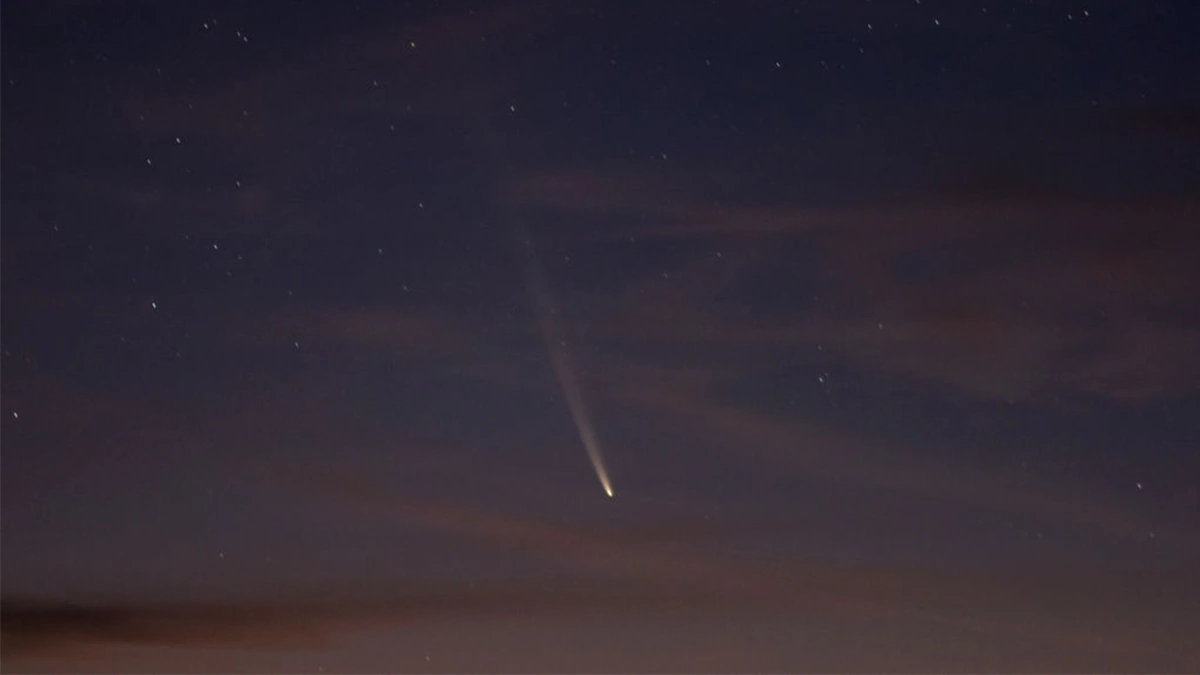
Okay, stargazers, grab your telescopes (or binoculars, or even just your eyeballs!), because tonight’s the night. We’re talking about Comet C/2025 K1, a celestial wanderer currently making its way out of our inner solar system. And, well, it seems it’s not handling the journey too well. What fascinates me is that this isn’t just any comet sighting; it’s a front-row seat to a cosmic drama – the disintegration of a comet as it bids adieu to our sun.
But here’s the thing: why does this matter? Sure, it’s cool to look at, but what’s the real significance? Well, let’s dive in. It’s a bit like watching a slow-motion explosion in space, and understanding why it’s happening can teach us a lot about the composition of these icy bodies and the forces at play in our solar system.
Why is Comet C/2025 K1 Breaking Apart?
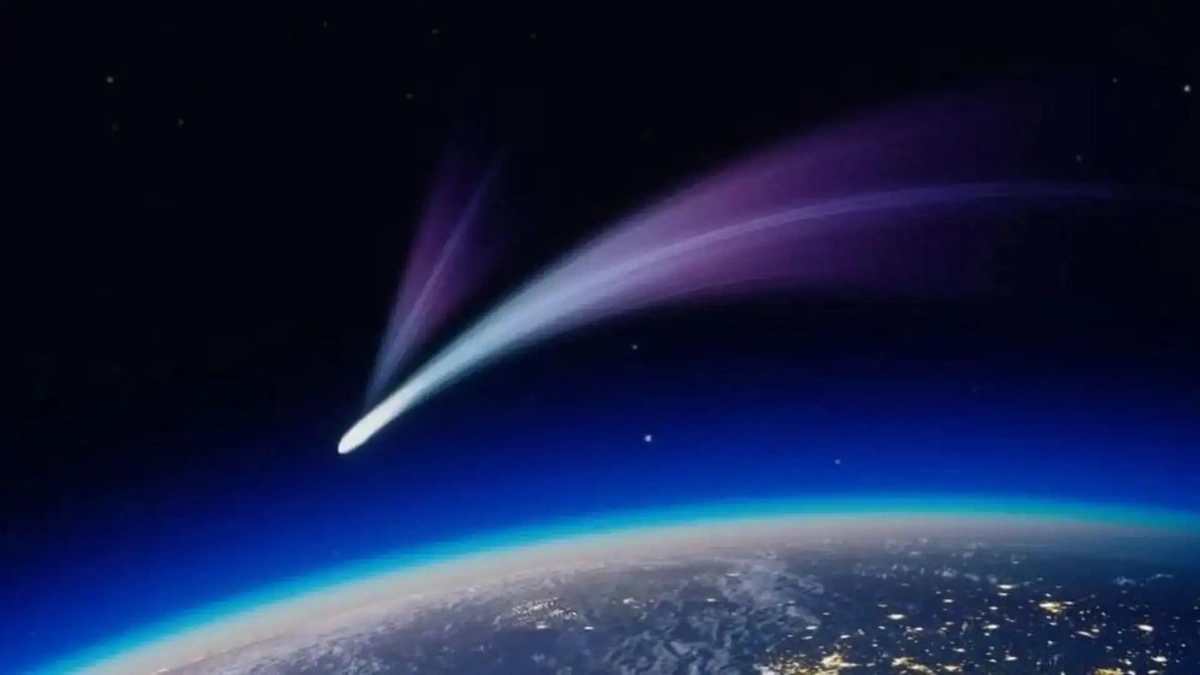
So, why is our comet friend falling apart? The main culprit is solar radiation. As comets approach the sun, they get bombarded with intense heat and light. This causes the ice and other volatile materials within the comet to sublimate that is, turn directly from solid to gas. This process releases dust and gas, forming the comet’s characteristic coma (the fuzzy atmosphere around the nucleus) and tail. But sometimes, the pressure from the solar radiation and solar wind is too much, and the comet starts to fracture and break apart.
Think of it like an ice cube melting too fast. The outer layers melt and weaken the structure, eventually leading to cracks and disintegration. Except, this ice cube is made of frozen gases and dust, and it’s several kilometers wide! The really interesting part is analyzing the debris field afterwards – what’s left tells scientists a lot about what the comet was made of in the first place. But,
How to Watch the Comet Tonight (If Weather Permits!)
Alright, let’s get practical. How can you see this celestial breakup? Here’s the thing – you’ll need a few things to increase your chances. First, a dark sky is crucial. Get away from city lights if you can. Second, a pair of binoculars or a small telescope will be a huge help. While you might be able to spot it with the naked eye under ideal conditions, optical aid will make it much easier. Third, know where to look. Astronomy apps like Stellarium or SkyView can pinpoint the comet’s location in the night sky. Check timeanddate.com here for a specific view of your local horizon and expected twilight timings.
A common mistake I see people make is not letting their eyes adjust to the darkness. Give yourself at least 20-30 minutes in the dark for your eyes to fully adapt. And, trust me, avoid looking at your phone screen during this time – it’ll ruin your night vision! But, if you missed it tonight, don’t worry. The comet’s disintegration may continue for several days or even weeks, offering multiple viewing opportunities.
What Does a Comet’s Disintegration Tell Us?
Now, back to the science. The disintegration of Comet C/2025 K1 isn’t just a pretty sight; it’s a valuable opportunity for scientists to study the composition and structure of comets . By analyzing the spectrum of light emitted by the dust and gas released during the breakup, they can identify the elements and molecules present. This information provides clues about the conditions in the early solar system when comets formed. I initially thought this was straightforward, but then I realized the complexity involved in differentiating between different spectral signatures.
Furthermore, the way a comet breaks apart can reveal information about its internal structure. Is it a loosely bound collection of icy pebbles, or a more solid, monolithic object? Observing the fragmentation process can help answer these questions. The data gathered from this event will contribute to our understanding of the formation and evolution of our solar system. And so,
The Emotional Connection: Why We’re Drawn to Comets
Let’s be honest – there’s something deeply emotional about watching a comet . These icy wanderers are remnants from the birth of our solar system, cosmic time capsules that have been traveling through space for billions of years. When we see a comet , we’re connecting with something ancient and vast, something far beyond our everyday concerns. It’s a humbling experience that reminds us of our place in the universe. It’s a feeling akin to looking up at the Milky Way on a clear night – a sense of awe and wonder that transcends words.
The death of a comet is like the death of a star in a way. It’s a reminder of the impermanence of things, even on a cosmic scale. It’s a beautiful, yet poignant moment to witness.
FAQ About Watching Comets
Frequently Asked Questions
What equipment do I need to see the comet?
Ideally, binoculars or a small telescope are recommended. A dark sky location away from city lights is also crucial.
What if the weather is bad tonight?
The disintegration process might last for several days or weeks, offering multiple viewing opportunities. Keep an eye on weather forecasts.
Is Comet C/2025 K1 dangerous to Earth?
No, Comet C/2025 K1 poses no threat to Earth. Its orbit is well-defined, and it will not come close enough to cause any harm.
Where can I find more information about comets?
NASA’s website and astronomy news sites are excellent resources for learning more about comets and other celestial events.
Ultimately, watching Comet C/2025 K1 break apart is more than just an astronomical event. It’s a chance to connect with the cosmos, to ponder the vastness of space and time, and to appreciate the beauty and fragility of these icy wanderers. So, step outside tonight, look up, and witness a cosmic drama unfold. And then, consider the fact that we’re all made of stardust – literally. As you observe this distant event, reflect on your own connection to the universe and your place in the grand cosmic scheme. You might even discover something profound about yourself in the process. Like, say, just how small and insignificant your daily worries are. This could also influence how to cultivate peaceful relationships , starting with yourself!
About the Author